How do construction loans work?
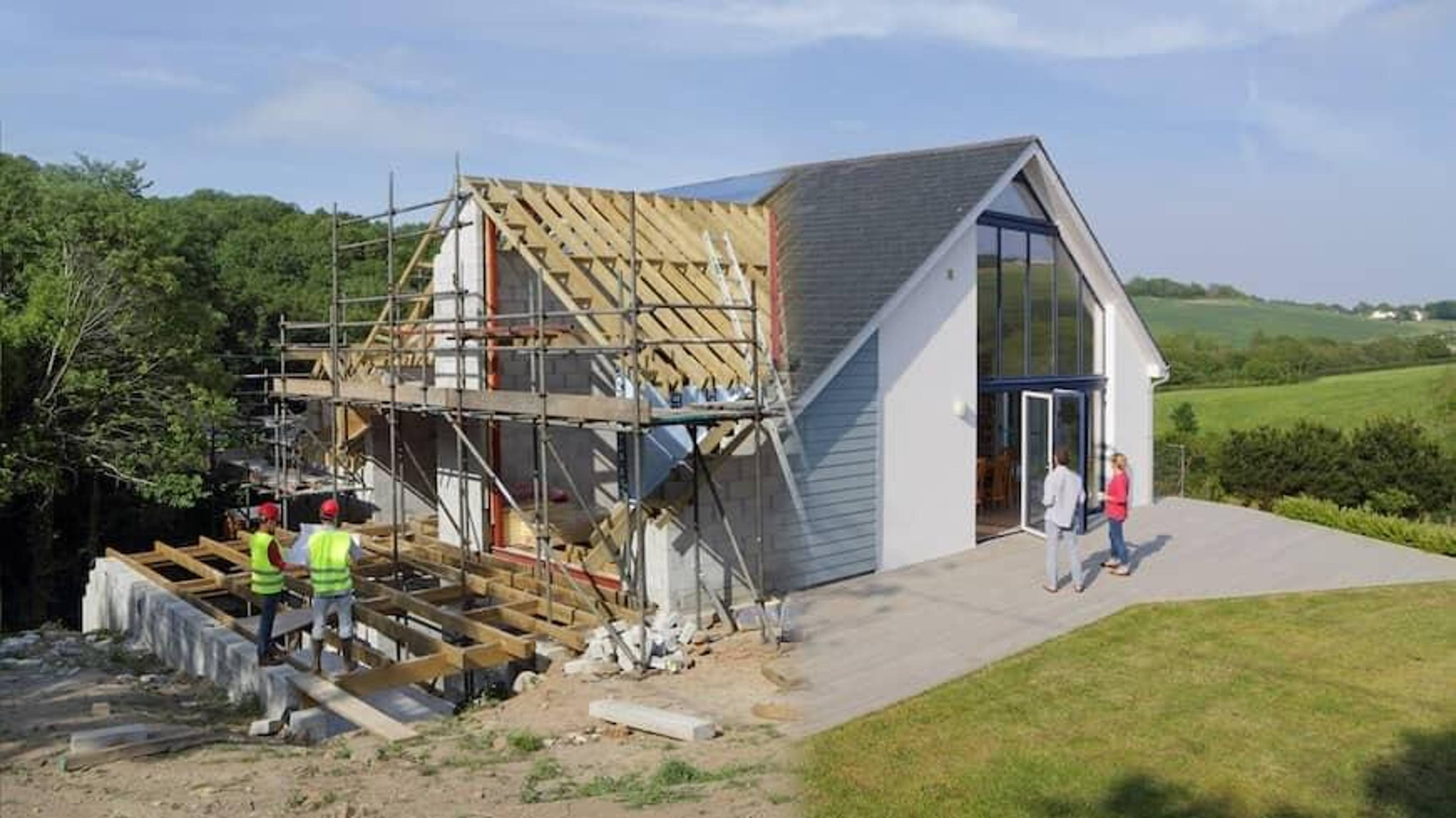
When you know exactly what you want in a house but can’t find a suitable existing or resale home, your next option could be to have it built for you.
Will it cost more that way? Possibly.
But that’s why construction loans exist: to help buyers finance new homes.
And not only professional developers have access to these type of financing options. Any consumer with the right financial criteria can take advantage of construction loans.
Are you ready to discover how a construction loan could help you build that dream home? Apply now!
What is a construction loan?
A construction loan can be used to finance building a residential property. It may also be called a home-building loan, “OTC”, “CtoP”, “one-time close loan” or “two-time close loan.”
A professional homebuilder or a consumer can take out a construction loan for the purpose of building a new house.
The loan is used to cover the cost of permits, materials, labor and perhaps even the land itself.
In most cases, your builder will be given lump-sum payments at key stages throughout the building of the home to cover expenses. Once the funds are secured, there isn’t much for you to do as the homebuyer but sit back and let your builder go to work.
How does a construction loan work?
After you or your chosen builder have located a parcel of land or lot to serve as the site for your new home, you or your builder will proceed with a process of obtaining a construction loan. Not all mortgage lenders offer these types of loans, but your builder can generally point you in the right direction with a recommendation or two.
Once financing has been secured, the clock starts ticking. Unlike mortgages that often run for a long time, such as a conventional home loan, construction loans are somewhat short-lived.
Construction loans aim to last only as long as it takes to build the house, which is often around nine to 12 months. Once construction is complete, the loan will need to be paid off or refinanced.
While you might not need to make payments on the loan principal until the build is completed, you’ll likely be on the hook for interest payments each month.
Homebuilding loans also typically come with higher interest rates than most other mortgage types, whether it’s a fixed rate or an adjustable rate.
Types of construction loans
Homebuyers can consider three types of construction loans.
Construction-only loan
This basic construction loan covers the costs of building the home and nothing else. Once work is finished, you’ll repay the remainder of your loan balance or refinance the loan to bundle everything into your mortgage.
Though not common, a few government programs also support construction-only loans, most notably FHA and VA construction loan programs. These government agencies do not provide funding themselves, so you’ll still need to go through an approved lender for financing.
Construction-to-permanent loan
A construction-to-permanent loan provides the financing to pay for a new home construction then is modified to a longer-term conventional loan once construction is complete. Unlike a construction-only loan, you won’t be required to start a new loan after completion with this option, and you’ll pay one down payment and one set of mortgage payments.
Owner-builder / self-build loan
The funds from a construction loan usually go directly to your builder so that they can complete each phase of construction. However if you’re a contractor or homebuilder, you may qualify for an owner-builder loan and receive that money yourself. This option, while not as commont, would essentially remove a third-party contractor from the process.
It means you alone will be responsible for building your home. And you’ll need to show your lender that you have the qualifications and experience to take on a project of this scale. Depending on your state you may be required to acquire permits or approvals.
Construction loan interest rates
Lenders generally view investment in new construction as more risky than an existing building, so interest rates on construction loans typically run a bit higher.
The good news is you may be able to refinance the loan once the build is complete. Refinancing could essentially allow you to bundle your construction loan into a new mortgage.
That could mean you’d have a larger loan amount than if you chose a single-close construction loan, but your interest rate could be significantly lower on the combined refinance. That could mean less interest due over the life of the loan as well as potentially lower monthly payments.
Construction loans vs. conventional mortgages
A construction loan can be used to finance the building of a home with a builder that requires the buyer to make large payments at various stages throughout construction, such as pouring the foundation, framing, drywalling and installing cabinetry, countertops, light fixtures, etc.
But a construction loan isn’t always the only path. In many scenarios, such as buying from a subdivision or tract-style homebuilder constructing several or even hundreds of homes in one neighborhood, you could secure a more common home loan from your lender. There are generally more affordable conventional loans with down payment options as low as 3% of the sale price.
Requirements for construction loans
Most lenders will likely have stricter requirements for a construction loan than they might with other mortgage products. While specific qualifications for construction loans will vary from lender to lender, they’ll focus on three common points: credit score, debt-to-income and cash on hand for down payment options.
Lenders might also want to see a detailed layout of your homebuilding plan before agreeing to loan you the money to build it. You can almost think of it like a small-business loan: A bank will want to examine a business plan showing that funds will be put to good use before loaning money for the venture.
A conventional mortgage generally doesn’t require that kind of in-depth documentation. The closest comparison might be a HELOC or home equity loan requirements, which verify the property itself will provide adequate collateral for the home loan.
How to get a construction loan
Lenders often use more rigorous criteria when vetting borrower qualifications on construction loans, so you’ll want to be sure your lending profile is as strong as possible before applying for this kind of financing.
Before you get in too deep, be sure to consult a Loan Officer who can assess your situation, answer questions and help you make the best decision based on your circumstances.
Applying for a construction loan is an early step that helps determine how much you can qualify to borrow. If you’re ready to get those hammers swinging, apply now!
Applicant subject to credit and underwriting approval. Not all applicants will be approved for financing. Receipt of application does not represent an approval for financing or interest rate guarantee. Refinancing your mortgage may increase costs over the term of your loan. Restrictions may apply.
All information provided in this publication is for informational and educational purposes only, and in no way is any of the content contained herein to be construed as financial, investment, or legal advice or instruction. Rate does not guarantee the quality, accuracy, completeness or timelines of the information in this publication. While efforts are made to verify the information provided, the information should not be assumed to be error-free. Some information in the publication may have been provided by third parties and has not necessarily been verified by Rate. Rate its affiliates and subsidiaries do not assume any liability for the information contained herein, be it direct, indirect, consequential, special, or exemplary, or other damages whatsoever and howsoever caused, arising out of or in connection with the use of this publication or in reliance on the information, including any personal or pecuniary loss, whether the action is in contract, tort (including negligence) or other tortious action.