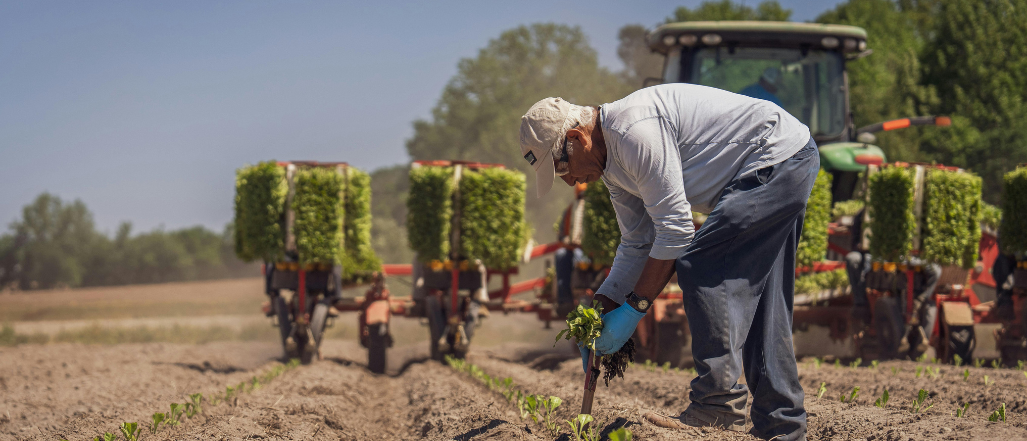
Agricultural work can be some of the most dangerous employment in the country. And, while farming equipment is the cause of many injuries, it isn’t the only risk faced by farm workers. Chemical exposure from fertilizers and pesticides, falls, repetitive motion injuries, broken bones, strains and sprains, and heat-related injuries and illnesses are all quite common.
Carrying worker’s compensation insurance for employees is mandatory for businesses in most states. However, farming carries some exceptions in some states. The size of a farm operation and how many employees it has (and, in some cases, the type of employees) can all have an impact on whether or not worker’s compensation insurance coverage is required.
Regardless of whether or not it is required, carrying worker’s compensation insurance for farm workers is likely a good idea for the vast majority of agricultural enterprises, no matter their size.
Protect your business
What is worker’s compensation insurance?
Worker’s compensation insurance is coverage for businesses that pays for things like medical expenses and loss of income to workers injured while they are working.
Like most forms of insurance, worker’s compensation is regulated at the state level, so required coverages can vary dramatically from one state to the next.
While most employers are required to carry this insurance in most states, small farms are frequently exempted from having to cover workers.
Why would a farm be exempt from a worker’s compensation mandate?
Small farms, particularly ones that are family-owned and operated, may be exempt from the requirement that they carry worker’s compensation insurance.
In part, this is to reduce the paperwork burden on very small agricultural concerns. Some farms, for example, are considered small businesses with limited numbers of employees, most of whom are hired for seasonal work.
Family farms may be almost entirely run by family members, only hiring help during peak harvest, which can be as little as 30 days.
Because of the seasonal nature of the work, the limited number of employees (often including family), and the significant administrative burden for compliance, some states may exempt some farms from carrying worker’s compensation.
Who is covered by worker’s comp insurance?
In most businesses, all employees are covered by worker’s compensation insurance. Businesses may even be required to cover independent contractors, depending on how their work is structured.
For example, if an employer provides equipment and specifies what hours an independent contractor must work, a state or federal regulatory authority may determine that the independent contractor is functioning as a regular employee, who then must be covered under the company’s worker’s comp policy.
Agricultural work is frequently treated differently from typical businesses. Some states do not require worker’s compensation coverage for certain categories of workers, such as domestic help and farm labor. Family members, including spouses and minor children, who work on a farm may also be exempted from coverage requirements.
The size of the agricultural interest can also be a factor as to whether or not worker’s compensation coverage is required. Small farms may be exempt, while larger, more corporate operations may be required to cover all farm workers with worker’s compensation coverage.
Even if a farm is not required to carry worker’s compensation coverage, it might be a good idea to obtain coverage. Agricultural work is risky, and injuries can happen on the job, while a standard health insurance policy may specifically exclude coverage for work-related injuries.
What does worker’s compensation insurance cover for farm workers?
Worker’s compensation insurance covers expenses that are related to a workplace injury. These can include coverage for medical costs, such as hospitalizations and rehabilitation expenses, along with lost wages while one recuperates.
This is why even if you manage a small farm and are exempt from carrying coverage, you may want to consider purchasing worker’s compensation insurance.
It could be critical coverage to have in the event that you are injured on the job, especially if your health insurance coverage exempts workplace injuries, because that would require you to pay out of pocket to cover your medical costs.
Worker’s compensation insurance coverage also frequently includes temporary total disability benefits (TTD). These are temporary payments designed to replace a portion of lost wages while the injured party is recovering. This can be a significant lifeline of income if you are unable to work, particularly during key times like planting and harvest time; these funds can even be used to hire help to fill in while someone is recuperating.
And, because farm work can be dangerous, it’s important to note that worker’s compensation coverage also includes permanent disability insurance. If an employee on the farm is injured and becomes permanently disabled, worker’s compensation coverage can provide disability income for life.
How much does worker’s compensation coverage for a farm cost?
Like many other forms of insurance, worker’s compensation insurance will consider a range of risk factors. The size of your farm, the number of employees you have, claims history, annual revenue, and even the types of crops, equipment used, or the livestock you raise can impact your premiums.
Worker’s compensation insurance is usually calculated as a percentage of payroll. The percentage amount will vary along with the risks.
If you’d like to learn more about worker’s compensation insurance, what it includes, and how it can protect your farm workers, contact the experts at Rate Insurance. With a wide range of insurance providers to choose from, they can help you find the right coverage at the right price.
Get your free consultation
Disclaimer:
All information provided in this publication is for informational and educational purposes only, and in no way is any of the content contained herein to be construed as financial, investment, or legal advice or instruction. Rate Insurance does not guarantee the quality, accuracy, completeness or timelines of the information in this publication. While efforts are made to verify the information provided, the information should not be assumed to be error free. Some information in the publication may have been provided by third parties and has not necessarily been verified by Rate Insurance. Rate Insurance, its affiliates and subsidiaries do not assume any liability for the information contained herein, be it direct, indirect, consequential, special, or exemplary, or other damages whatsoever and howsoever caused, arising out of or in connection with the use of this publication or in reliance on the information, including any personal or pecuniary loss, whether the action is in contract, tort (including negligence) or other tortious action.