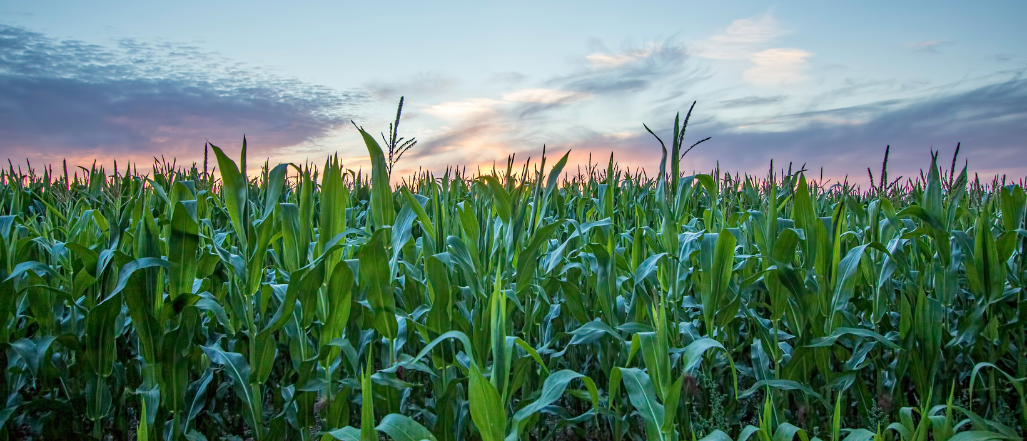
Farming is incredibly tough but rewarding work. Not only is it physically demanding, but your success is frequently weather-dependent.
Strong storms, hail, wildfires, insects, plant diseases, and wildlife damage to crops and livestock are persistent threats.
Crop insurance is a way to protect your livelihood against the financial losses that come with farming and ranching.
Protect your business
What is crop insurance?
Crop insurance is a risk mitigation tool that helps to protect your assets in the event of a covered loss. Insurance coverage can help you to recover from a bad year.
According to the Insurance Information Institute, there are several main forms of crop insurance: multiple perils coverage, crop-hail coverage, and crop revenue coverage.
Multiple perils crop insurance is the broadest, and is designed to protect farmers from a wide range of losses. It protects agricultural interests from losses that are a result of bad weather, insect or disease damage, and more.
Crop-hail coverage is separate insurance, and is designed to cover losses after a damaging hailstorm. Hail can cause extensive damage to crops, especially in certain regions of the country where hailstorms are frequent.
Crop revenue coverage, also called Revenue Protection insurance, is designed to address revenue losses that can occur when yields or crop prices drop. Either of these can be devastating to a farm, so this is important coverage to have—so important that most of the federal crop insurance policies sold today include some type of revenue protection coverage.
Agricultural crops and livestock are frequently sold on contracts, with an agreed-to price that is determined before harvest. If a farmer or rancher experiences a harvest or livestock loss during the growing season, they are still required to fulfill the contract. Revenue protection insurance is designed to help cover the losses in this scenario.
Other forms of agricultural insurance include:
- Livestock risk/Gross margin protection – Protects against a drop in price or margins
- Actual production history coverage – Coverage that protects future crops based on historical yields
- Area Risk protection – Coverage that protects against low prices and/or low yields, based on the county in which the farm is located
- Whole Farm Revenue protection – Insurance designed for farms that grow multiple commodities, with up to $17 million in insured revenue
- Dairy Revenue – Specialized coverage tailored to meet the needs of dairy producers, offering protection against steep declines in milk prices
- Rainfall Index – Coverage for livestock producers who rely on rangeland for feed, which can be disrupted due to drought
- Micro Farm and Controlled Environment – Coverage for smaller-scale operations (up to $350,000 in approved revenue) and crops grown in fully controlled/enclosed environments
- Catastrophic Coverage – A catastrophic plan is the most basic type of crop insurance, and as its name indicates, this type of plan typically kicks in when a farmer has experienced a major loss of 50% or more of their crops
As you can see from all of the different types of coverages available, crop insurance is available for a very wide range of grower sizes and types.
Who needs crop insurance?
If you raise crops or livestock to sell as a business, you probably need crop insurance. Rural homeowners who raise food for themselves and then sell what isn’t used at a farmstand do not need (and probably would not qualify for) crop insurance—but most other agricultural business entities should consider it.
Farming is expensive and risky. Protecting your investments and livelihood with crop insurance makes sense for most agricultural businesses.
Crop insurance is not just for large corporate farms; it can protect smaller farms as well. Unfortunately, many small farms remain under- or uninsured. It can be challenging to find insurance for farms with lower annual revenues, or those that produce many different types of crops.
There are even some policies available for urban and micro-farms, offering protection to these niche growers who make fresh produce available even in the most heavily built surroundings.
What is the Federal Crop Insurance Program?
Crop insurance is administered by the Risk Management Agency, a part of the US Department of Agriculture, through its Federal Crop Insurance Corporation, or FCIC.
The federal government works with a network of approved insurance providers (AIPs) in a public-private partnership, making crop insurance available across the country. For some sizes and types of agricultural businesses, participation in the FCIC program is required to be eligible for other government agricultural program benefits.
Some crop insurance premiums are subsidized, but in many cases, farms must meet certain qualifications in order to receive subsidies. Annual sales, acreage, and types of crops grown are examples of what is considered by an approved insurance provider when determining the types of crop insurance that might be available to a farm, and how much insurance you’ll need.
Is hail damage covered by crop insurance?
Hail can be extremely damaging to crops, and some areas of the country that have large agricultural interests are also susceptible to hailstorms. Hail can range in size from very small, pea-sized ice, to as big as a softball. The size of the hailstones, how wide the storm path is, and how much hail falls all can have an impact on how much damage is done to crops.
Coverage for hail damage is not included in policies administered by the FCIC. This insurance is available to farmers through private insurers.
If you are interested in learning more about crop insurance, contact the experts at Rate Insurance. They can help you to find the right combination of agricultural insurance coverage to protect your farm and livelihood from all of the weather and pest-related threats that can pose a risk to your yields.
Get your free consultation
Disclaimer:
All information provided in this publication is for informational and educational purposes only, and in no way is any of the content contained herein to be construed as financial, investment, or legal advice or instruction. Rate Insurance does not guarantee the quality, accuracy, completeness or timelines of the information in this publication. While efforts are made to verify the information provided, the information should not be assumed to be error free. Some information in the publication may have been provided by third parties and has not necessarily been verified by Rate Insurance. Rate Insurance, its affiliates and subsidiaries do not assume any liability for the information contained herein, be it direct, indirect, consequential, special, or exemplary, or other damages whatsoever and howsoever caused, arising out of or in connection with the use of this publication or in reliance on the information, including any personal or pecuniary loss, whether the action is in contract, tort (including negligence) or other tortious action.