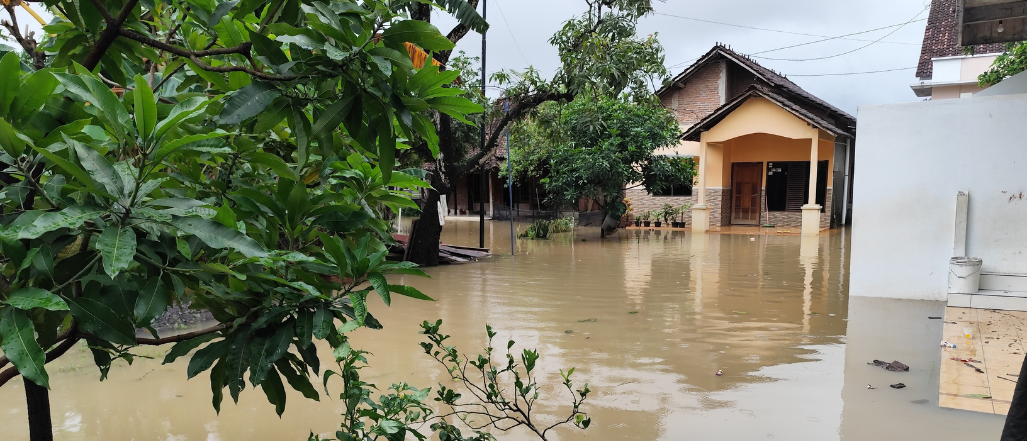
Homeowners know they need to carry homeowners insurance if they have a mortgage, as it is typically part of the purchasing process to secure a policy before closing. And, if the home they are purchasing is in a federally designated area for high flood risk, they will be required to secure flood insurance as well.
However, there are plenty of places outside of designated high-risk zones that can flood. Flooding can happen just about anywhere, even well away from coastal regions or rivers and streams. Urban areas can flood when rainfall or snowmelt exceeds the drainage capacity.
Floods can affect homes in a very wide area, and the damage they can cause is hard to repair. Because mold grows in damp environments, even shallow flooding can cause many thousands of dollars in damage to a home, requiring extensive repairs.
In short, flooding is a risk for many, many homeowners. Given the high risk, the potential numbers of structures affected, and the need for extensive repairs, flooding is not covered by standard home insurance policies.
Don’t let a flood sink you financially
Policy confusion
Many homeowners mistakenly believe that their homeowners insurance policy will cover flooding.
Because homeowners insurance typically covers other types of natural disasters, such as tornadoes and hail damage, and covers “sudden and accidental” incidents that flood inside the house such as burst pipes, this confusion is somewhat understandable. It is essential to know what your policy covers and understand its exceptions.
Unfortunately, a lot of homeowners find out too late that when rising water enters the house, the damage caused is not covered. For that type of flooding, homeowners need to purchase a separate flood insurance policy.
Lender-required flood insurance
While attaining flood insurance is a good idea for most homeowners, for some, it is required coverage.
Mortgages on homes located in high-risk flood zones that are backed by federal programs, such as VA loans, Fannie Mae and Freddie Mac, and those insured by the Federal Housing Authority (FHA loans), are required to carry flood insurance.
Some lenders require homeowners to carry flood insurance even if the property being purchased isn’t in a designated high-risk zone. Talk to your mortgage lender about their flood insurance guidelines and specifications if you have questions about whether you will be required to purchase additional flood insurance on your new home.
Increasing risks
Flooding risks are increasing for a variety of reasons, including climate and landscape changes such as new buildings and roads.
Intense rainfall can quickly overwhelm drains and sewer systems. The removal of trees and other vegetation—a step frequently taken when preparing an area for new construction—can increase the chance for high-volume water runoff into neighboring areas. Even minor changes to pavement can shift and increase water volume and speed.
Soil erosion, removing root systems that stabilize the soil, and paving large areas (such as adding a new parking lot) are all seemingly minor changes that can have a big impact on flooding.
No matter where you live, it is likely that the area around your home has changed, and will continue to change over the coming years. New neighborhoods mean the clearing of trees and installation of paved streets. New retail areas mean large parking lots that will alter runoff.
How can I find out about my home’s flood risk?
The easiest way to find out if your home is in a flood zone is to use the Federal Emergency Management Agency’s website. FEMA has a mapping tool that allows you to enter an address to assess flood risk.
Some local governments have flood risk maps, so you can check with your local municipality to see if they have any information.
Most flood maps are based on historical data, which can overlook certain risk factors, such as the impact of new construction. Private companies, such as First Street, are looking to fill the information gaps by using a broader range of data sets to provide governments and organizations with a fuller risk picture.
How much does flood insurance cost?
As with other forms of insurance, the amount you will pay for flood insurance will depend on your risk. The higher your risk, the more expensive your premium will be. Coastal areas and those with nearby rivers and streams will have higher premium costs than those located far from water.
What does a flood insurance policy cover?
Federal flood insurance policies provide limited coverage, up to $250,000 to repair your home’s structure after a flood. Personal property coverage is not included, but can be purchased separately; the maximum coverage limit for your belongings is $100,000. This means the maximum amount a government-backed policy will pay out is $350,000.
Depending on your home’s location, materials, and the value of your belongings, this could mean your home is underinsured for flood risk.
The federal National Flood Insurance Program (NFIP) used to be the only real option for homeowners who wanted or needed to buy flood insurance. Increasingly, private insurers are offering flood insurance, which may be a better option for some homeowners. Flood insurance policies offered through private insurers often allow for higher coverage limits.
How can I get flood insurance?
Flood insurance is a separate policy, and NFIP policies must be purchased through an insurance agent.
If you want to learn more about flood insurance or get quotes on a policy, contact the experts at Rate Insurance. With access to a range of insurers, they can help you to find a flood insurance policy that protects your home and fits your needs and your budget.
Get your free flood insurance quote
Disclaimer:
All information provided in this publication is for informational and educational purposes only, and in no way is any of the content contained herein to be construed as financial, investment, or legal advice or instruction. Rate Insurance does not guarantee the quality, accuracy, completeness or timelines of the information in this publication. While efforts are made to verify the information provided, the information should not be assumed to be error free. Some information in the publication may have been provided by third parties and has not necessarily been verified by Rate Insurance. Rate Insurance, its affiliates and subsidiaries do not assume any liability for the information contained herein, be it direct, indirect, consequential, special, or exemplary, or other damages whatsoever and howsoever caused, arising out of or in connection with the use of this publication or in reliance on the information, including any personal or pecuniary loss, whether the action is in contract, tort (including negligence) or other tortious action.