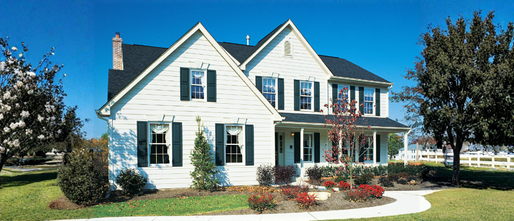
Congratulations! You’ve either just purchased your first home, or you are doing the research to learn more about what to expect.
This is an exciting time, but some aspects of making such a large purchase may feel a bit overwhelming—including questions about your insurance coverage. Here are some terms you should know and factors to consider when you’re starting out.
Home insurance
If you have a mortgage, your lender will require proof of homeowners insurance coverage before you complete the closing process.
The lender technically owns the home during the term you established for the loan. When you complete all of those payments, the home belongs to you. Until that point, you will almost certainly be required to carry homeowners insurance.
If a covered event like a fire or tornado damages or destroys your home, insurance is designed to help you repair or rebuild the structure and replace the contents. Here are some important terms and types of coverage that you should understand in your insurance policy.
Protect your home
What are the core components of a home insurance policy?
Dwelling coverage – This is the part of your policy that covers the structure of your home, including systems and buildings that are physically attached to it, such as an attached garage.
Other structures – This portion of your policy protects structures on your property that are not attached to the home, such as a freestanding garage or a tool shed.
Liability coverage and medical payments – This helps to protect homeowners if they are ever sued and found to be liable, such as for an injury that happens on the property, along with coverage for related medical bills.
Personal property coverage – This protects all of your “stuff.” Anything you move into your new home, such as furniture, bedding, kitchen appliances, electronics, all of your clothing, shoes, sporting equipment, and so on is considered personal property. A lot of homeowners undervalue how much it would cost to replace everything in their homes, particularly after they’ve lived in a home for a while and have either accumulated property, or replaced older items.
What should I know about how to value all of my stuff?
Actual cash value (ACV) versus replacement cost (for personal property) – This can trip up homeowners, but it is an important concept to understand. Actual cash value means that your insurer will replace damaged or destroyed personal property at its depreciated rate.
Replacement cost coverage means that your insurer will cover damaged or destroyed items at the amount it costs to replace it. A quick example to illustrate how much of a difference this can make is to consider a couch destroyed by a covered event. The depreciated cost of a piece of upholstered furniture is a fraction of what it would cost to buy a sofa to replace it.
If you choose to insure your belongings at an actual cash value, you might receive $300 from your insurer to replace a sofa, even though the same style and model costs $750 to buy new. Now apply that same standard to all of your belongings, and you can quickly see that actual cash value coverage is likely to be insufficient.
A lot of homeowners insurance policies cover personal property at an actual cash value level by default. If you wish to insure your goods at a replacement cost level, you may need to ask for this coverage, and it may affect the amount you pay in premiums.
What is a deductible, and why do some homeowners policies have more than one listed?
Deductible – A deductible is the amount an insured individual pays before the insurance coverage kicks in. Homeowners and auto insurance policies typically have different levels of deductibles, from low dollar amounts to high. Selecting a higher deductible usually results in a lower premium cost. This is because by choosing a higher deductible, you are accepting paying more of the cost to repair damage out of your own pocket—which means that your insurer will need to pay less.
In other words, your insurer will recognize that you are choosing to bear more of the replacement costs and will in turn charge you less for your premium.
If you decide to save money on your premium by accepting a higher deductible, make sure that it an amount you can comfortably afford.
Hurricane, hail, and other special deductibles – Some areas of the country experience extreme weather events that have generated widespread damage to homes. Coastal areas, for instance, are at higher risk for hurricane damage than those farther inland. Parts of the Midwest and the Plains states experience damaging hail storms. In these regions, your homeowners insurance coverage may include separate deductibles for these risks.
In some cases, this deductible will be a percentage of your dwelling total. For example, a hurricane deductible of 4% on a home insured for $400,000 means that the homeowner will be responsible for the first $16,000 of repairs if a hurricane damages their house.
Protect your home
Other important parts of your policy
Policy limits – Your homeowners insurance policy will have policy limits for both your dwelling and personal property coverage. It’s important to review these policy limits when you make substantive changes to your home (such as remodeling), or new purchases (such as expensive electronics, sporting equipment, or jewelry) as you may need to explore purchasing additional coverage to make certain everything is protected.
Exclusions – All insurance policies have some exclusions. Homeowners insurance, for example, virtually always excludes coverage for damage caused by flooding. Commercial use is also typically excluded, which is an important factor to consider for those who are self-employed or have a “side hustle” in the gig economy.
Valuable personal property – For items that have high individual price tags, you will want to pay close attention to your policy’s limits and exclusions. Art, jewelry, guns, expensive electronics, and special collections usually need to be insured separately using a valuable personal property policy, or rider.
Auto insurance
Collision coverage – Collision coverage is typically what we think of when we talk about car insurance. It covers repairs if your vehicle is damaged in a collision, either with another car or if it is a single-vehicle accident, such as hitting a patch of ice and sliding off the road.
Comprehensive coverage – Comprehensive coverage is designed to help pay for repairs for damage incurred other than vehicle collisions. A tree falling on your car while it is parked in a lot, hail or storm damage, vandalism, and theft are all ways your car can be damaged other than being in a car accident. If you have a car payment or lease your vehicle, you will probably be required by your lender to carry both collision and comprehensive coverage.
Liability coverage – Auto liability coverage is designed to help if someone is injured in an accident and you are determined to be at fault. Bodily injury coverage will help to pay legal and medical costs, if someone is injured in a car accident. Property liability will help pay to fix damage done to someone’s property, such as repair fencing that is damaged as a result of a car accident.
Uninsured/underinsured driver coverage – This coverage protects you if you are in an accident with another driver who is determined to be at fault, and who does not have insurance (or does not carry enough insurance). In some states, purchasing this coverage is required, while in others it is optional.
Protect your vehicle
Umbrella policies
As noted above, homeowners policies have coverage limits. So do auto insurance policies, including for liability coverage.
This means that if you are determined to be at fault in an accident, and it results in large legal or medical bills, the liability coverage included in your home or auto policy may not be enough to cover the amount you are responsible for paying.
Umbrella policies offer additional coverage after your policy limits are reached.
It can be hard to imagine an event that exceeds your policies limits when those limits are oftentimes hundreds of thousands of dollars. However, if you are determined to be at fault in an accident, legal and medical bills can quickly exceed the limits of a standard policy.
Umbrella policies can also protect homeowners from issues that are not addressed in standard coverage, such as being sued for libel or slander.
Risk exposure is an important consideration. Does your property have features that could increase your risk, like a pool, trampoline, or back up to a lake or stream? Do you have a dog? Do you have one or more new drivers in your home? Do you hold a volunteer position that could expose you to accusations of libel or slander?
While not every homeowner will need the additional protection offered by umbrella coverage, given the sharp rise in legal and medical costs it is coverage worth considering, particularly if you have increased risk exposure.
This is just an overview of homeowners, auto, and umbrella insurance coverage. If you want to learn more about any of these forms of insurance, or if you are interested learning about how much these policies cost, contact the experts at Rate Insurance.
With access to a wide range of insurance providers, they can help you to find coverage that fits your budget as a new homeowner.
Umbrella insurance