One of the most important things homeowners should take the time to do is to carefully read their homeowners insurance policy. Knowing what is in your policy and understanding how these provisions can impact your ability to rebuild is very important.
Too many homeowners find out at the worst possible time that damage to their home is either only partially covered or isn’t covered at all, leaving them with a big repair bill.
No matter where you live, there are likely to be some potential perils that your region is at a higher risk of experiencing, and whether any ensuing damage is covered may rest on the type of insurance coverage you selected.
Knowing what your homeowners insurance covers is an essential part of being a homeowner. Selecting insurance coverage based on price alone might mean your home doesn’t have the protection it needs.
Protect your home
What is named peril coverage?
Simply put, named peril coverage is coverage that is restricted to events that your policy specifically lists. Anything that is not on the list is not covered.
So, with a named peril policy, homeowners must pay close attention to what is included and think carefully about what types of events could cause major damage that might be missing. Common named perils are: fire, smoke, windstorms, explosions, burglary, falling objects, and lightning. This list sounds pretty comprehensive of the potentially devastating things that could happen to a home…but is it?
Depending on where you live, the fact that hail damage is not on the list might be an issue. That could signal that you are in an area where hailstorms are particularly frequent and damaging, and you may need to purchase additional coverage to protect your home.
Named peril coverage is narrower in that the covered party (you, as the homeowner) will need to be ready to demonstrate that damage to your home was caused by one of the events specifically listed in your policy.
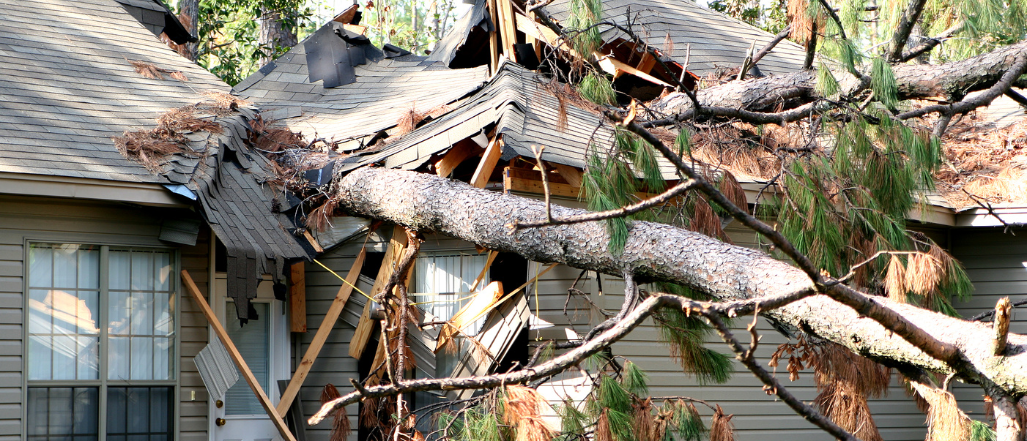
For example, if your roof is damaged in a storm and your policy covers windstorms but not hail damage, you should anticipate that your insurance adjuster will try to determine if wind or hail was the direct cause of the damage.
What is open perils coverage?
The open perils approach is the opposite. Damage is covered unless the event that caused it is specifically excluded.
Some other names for this type of coverage are “all risks” or “all perils” insurance. With an open perils policy, damage to your home is covered unless your policy specifically states that the event that caused it is excluded.
This makes it very important to review what your policy states is excluded. “All perils” more precisely means “all perils are covered, except for the ones that are excluded.”
In short, “all” doesn’t mean everything, so knowing what is in your policy is key. All perils coverage is more comprehensive than named perils coverage, but there are always going to be exclusions.
What are some common exclusions?
Regardless of whether you have a named perils policy or an open perils policy, flooding is virtually always listed as an exclusion. This means that if you want your home to be protected in the event that flooding occurs, you will need to purchase a separate flood insurance policy.
Because flooding is so common and can happen just about anywhere, impacting wide areas, this particular risk is almost never included in a home insurance policy.
Homeowners mistakenly think that you need to live near a body of water to potentially be affected by flooding. However, floods have devastated urban areas when clogged storm drains are overwhelmed by heavy rainfall, and they’ve also happened when warmer temperatures cause sudden snowpack melt. When the ground is still frozen, it cannot absorb water from melting snow, leading to flooding in unexpected areas.
Coverage for earthquakes is similarly regularly excluded from both named perils and open perils policies. And, again, this is due to widespread damage in areas where earthquakes occur. A strong earthquake can cause billions of dollars in property damage and impact thousands of homes. Wherever the earthquake risk is considerable, you will have to purchase a separate policy.
Hurricane coverage is increasingly being sold as a separate policy in coastal states, which means it is frequently excluded from basic perils coverage. This is true even in areas that require hurricane coverage, as it will frequently carry its own set of deductibles and policy limits.
Which type of policy should I choose?
Deciding between named perils coverage and an all-perils policy will depend on a number of factors, primarily based on the types of risks your home may be exposed to. A named perils policy will list what is included in your coverage, while an all-perils policy will list what is excluded.
You may be wondering, if the list of what is excluded in an all-perils policy is similar to what is missing from a named perils list of what is included, is there really that much of a difference between the two types of coverage?
This is a fair question, and the answer is yes—there really is a difference. But you might not notice unless you need to file a claim. That’s because the burden of demonstrating what caused the damage to your home shifts, based on which type of coverage you have.
In the case of damage to a home with named perils coverage, the insured party (the homeowner) will need to show that the damage was caused by a named peril. On the other hand, the same damage to a home with open perils coverage is assumed to be covered by the insurer.
It’s a nuanced distinction, but a very important one.
If you have questions about the differences between open perils and named perils coverage, contact the experts at Rate Insurance. With access to a wide range of home insurers, they can help you find the right coverage to protect your home at the right price.
Get a free quote
Disclaimer:
All information provided in this publication is for informational and educational purposes only, and in no way is any of the content contained herein to be construed as financial, investment, or legal advice or instruction. Rate Insurance does not guarantee the quality, accuracy, completeness or timelines of the information in this publication. While efforts are made to verify the information provided, the information should not be assumed to be error free. Some information in the publication may have been provided by third parties and has not necessarily been verified by Rate Insurance. Rate Insurance, its affiliates and subsidiaries do not assume any liability for the information contained herein, be it direct, indirect, consequential, special, or exemplary, or other damages whatsoever and howsoever caused, arising out of or in connection with the use of this publication or in reliance on the information, including any personal or pecuniary loss, whether the action is in contract, tort (including negligence) or other tortious action.