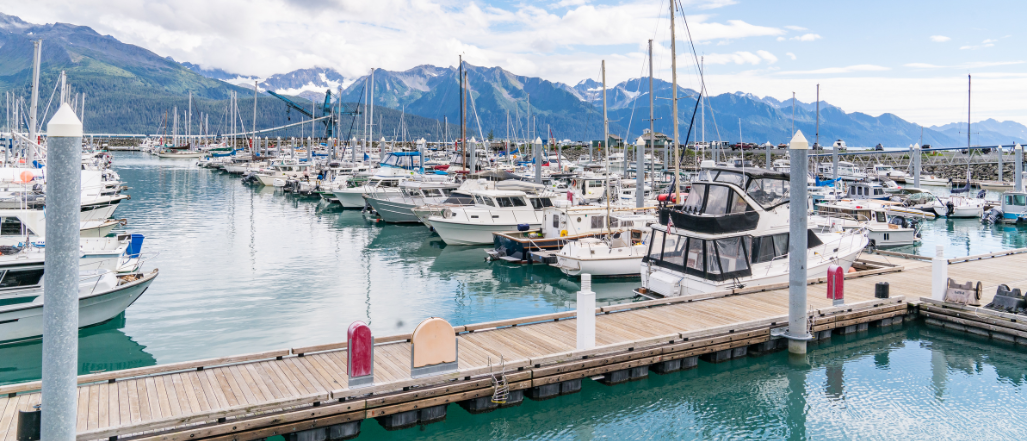
Summer is prime time for on-the-water fun and activities, and your marina will likely be busy with people getting the most out of their boats and other watercraft.
As a business owner, you want to protect your marina from accidental damage. The best way to guard against unexpected losses is to be properly insured. For most marinas, that means purchasing dock and pier insurance.
Protect your business
What is dock and pier insurance?
Dock and pier insurance is specialized coverage for marinas that protects the business from losses associated with storm damage, fires, and more. It also typically includes liability coverage in the event that a customer’s boat is damaged by something that would be the marina’s responsibility, such as the poor condition of a dock.
This type of insurance covers most of the permanent structures at a marina, such as pilings, gangways, utilities and power pedestals, and docks and piers.
Dock and pier coverage is essentially property insurance coverage for much of the infrastructure at marinas. If there’s a weather event that causes damage to structures at the marina and they need to be repaired or replaced, dock and pier insurance is the part of the insurance coverage that pays the claim.
Does general liability insurance cover accidents and damage?
General liability insurance is basic coverage designed to protect marina owners from injury claims arising from accidents (such as slips and falls) or property damage that can occur at marinas. It also does cover property damage that can happen at a marina.
General liability is what is known as third-party coverage, which means it protects a marina from financial losses for claims made by others.
Having just general liability coverage could leave areas of your marina unprotected, which means that damage could lead to out-of-pocket costs for repairs.
How much insurance coverage do I need on docks and piers?
Your insurance may require you to carry enough insurance to pay for the total rebuild of your marina’s structures, known as Replacement Cost Value.
Replacement Cost Value and Actual Cost Value provide different levels of protection, because Actual Cost Value pays claims based on depreciated estimates, rather than Replacement Cost Value, which pays claims at a level that is at the cost to rebuild.
Businesses that purchase ACV policies are placing their marinas at risk. A single weather event or fire can destroy a marina. A claim for actual cost value would reflect the depreciation over time, and is unlikely going to be a sufficient amount to rebuild.
What is a coinsurance clause, and why should marinas pay attention to it?
Many commercial insurers include what is known as a coinsurance clause in the policies they write. Coinsurance is an agreement between the insurance company and the business, where the business agrees to carry a certain level of insurance in order for the insurance company to write the policy.
Let’s take an example of a smaller marina that cost $3 million to build. The insurer has set a coinsurance requirement of 90%, which means that the marina must carry insurance to cover a replacement cost of at least $2.7 million. The marina then purchases a policy that covers $2.5 million, which is less than the 90% requirement, thinking that is close enough.
If a covered event happens, such as a fire or storm, and the marina makes a claim, the insurer will soon discover that by carrying less insurance, the marina was in violation of the coinsurance clause.
This scenario would likely result in the marina being required to pay a much higher portion of the repair costs, as they would be subject to a coinsurance penalty.
How much does dock and pier insurance cost?
Like most forms of insurance, dock and pier insurance premiums are based on risk. Marinas are inherently risky in the eyes of insurance companies. They are on the water and are therefore exposed to all of the many risks associated with lakes and coasts. Storm damage, flooding, and the potential for damage to boats moored at a marina are all likely.
Location matters too. Marinas situated on the coastline face different risks than those on lakes, for example. Hurricanes can cause extensive damage, and while some do have effects inland, the likelihood of hurricane damage is considerably higher on the coast.
So, the size, location, construction materials used, design, and more will have an impact on the premium cost for dock and pier insurance.
If you want to learn more about how your marina could benefit from having dock and pier insurance coverage, contact the experts at Rate Insurance. With access to a range of commercial insurance products, they can find the coverage that will meet the needs of your marina.
Get your free business insurance consultation
Disclaimer:
All information provided in this publication is for informational and educational purposes only, and in no way is any of the content contained herein to be construed as financial, investment, or legal advice or instruction. Rate Insurance does not guarantee the quality, accuracy, completeness or timelines of the information in this publication. While efforts are made to verify the information provided, the information should not be assumed to be error free. Some information in the publication may have been provided by third parties and has not necessarily been verified by Rate Insurance. Rate Insurance, its affiliates and subsidiaries do not assume any liability for the information contained herein, be it direct, indirect, consequential, special, or exemplary, or other damages whatsoever and howsoever caused, arising out of or in connection with the use of this publication or in reliance on the information, including any personal or pecuniary loss, whether the action is in contract, tort (including negligence) or other tortious action.